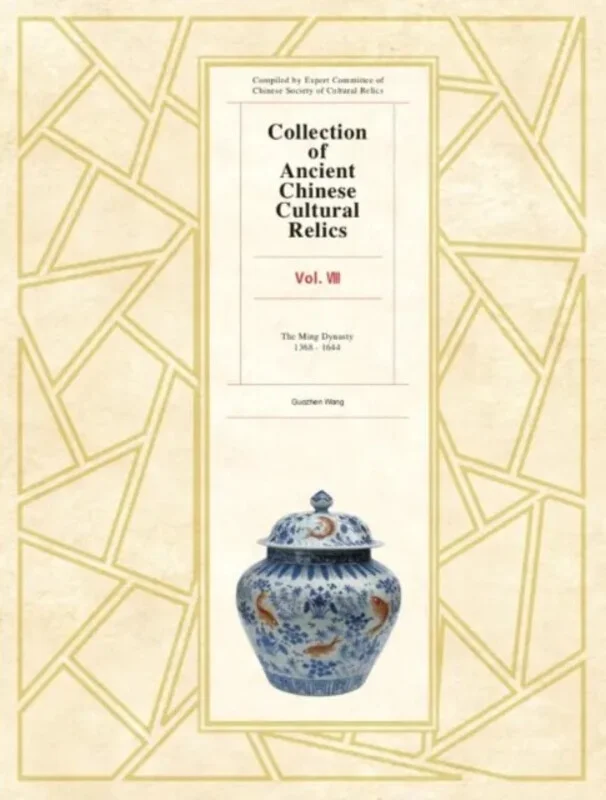
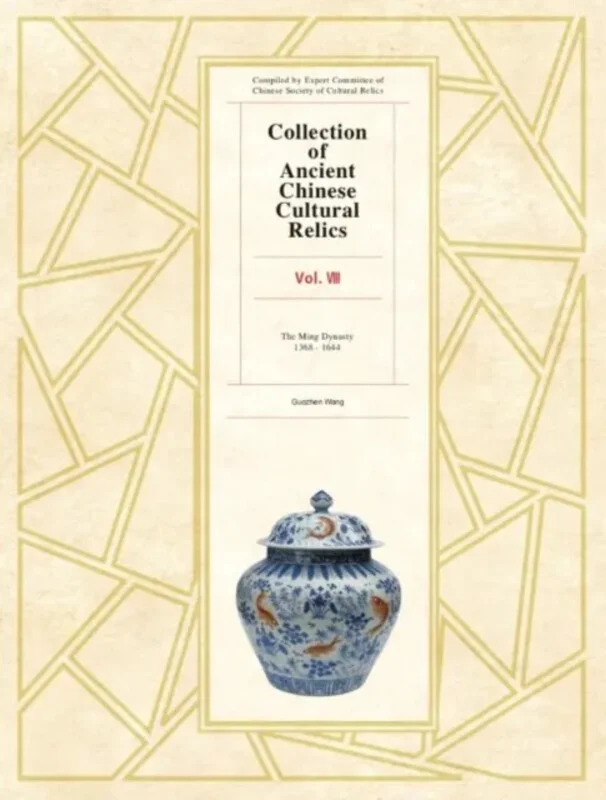
Collection Of Ancient Chinese Cultural Relics Volume 8 - The Ming Dynasty 1368-1644 - Wang Guozhen - Hardback Bog
Brand: ATF Press
Description
This book, a collection of ancient Chiinese cultural relics, is from the Ming Dynasty, 1368 to 1644. There are 379 relics. At the end of the Yuan Dynasty, a series of crises broke out after years of acuumulated unrest, and uprisings against the regime erupted everywhere. The Yuan Dynasty was on rhe edge of collapse. Many separate regimes emerged all over the country. Eventually the Han and Dazhou regimes were overthrown by an insurrectionary army led by Zhu Yuanzhang, who proclained himself Emperoi in Nanjing in1368 and he gave his new dynasty the name 'Ming'. Over the following close on 300 years, the new dynasty would witness reunification and reconstruction in the early years, followed by economic and cultural prosperity in the Jiajing and Wanli eras, and politcal corrutions, internal disorder and foreign invasions in the latter period. The Ming Dynasty would represent a zenith of feudal society in Chinese history. The Ming Dynasty gained access to rich jade resources and jade ware became more diversified. The emphasis was on exquisite itms of daily use, ornaments, and ornamental furnishigs. The period also saw the development of porcelain making., building on the foundation of the Song and Yuan Dynasties. The Jingdezhen Kiln, built in the Five FDynasties, became the domestic cnetre of porcelain making. Overglazed coliur techniques experienced rapid development, with underghalze blue and white porcelain became prominent. Calligraphy continued in the style of the Somng and Yuan Dynasties, but many new genress developed: 'Three Songs', 'Two Shens', 'Three Calligraphers of the Wu School', and the 'Four Matsers'. Paintinmgs in this period continued to develop with three different stages: 'imperial court decorative painting', and the 'Zhe school' and the 'Four Pillars of the Wu School; and 'Xieyi'.