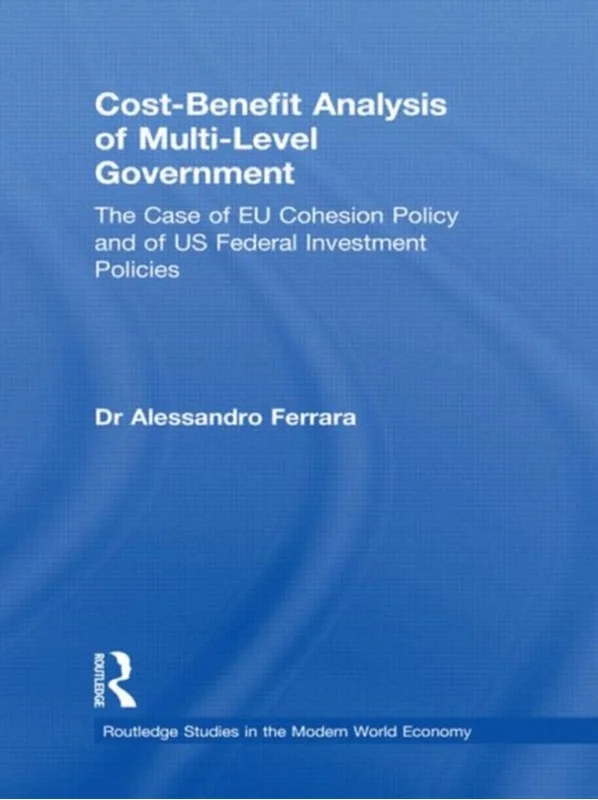
Cost-Benefit Analysis of Multi-level Government - The Case of EU Cohesion Policy and of US Federal Investment Policies - Alessandro Ferrara -
Brand: Taylor & Francis Ltd
Description
This book provides an original theoretical framework for assessing public investment policies co-financed by Union (Federal) governments. This framework is applied to two important case studies: the EU Cohesion Policy and the US Federal Investment Policies. Cost-Benefit Analysis of Multi-Level Government sheds light on a number of outstanding issues of economic theory by extending the theory of shadow prices, and provides guidance to real-world decision makers. In particular, the following questions are addressed: - - In which circumstances is intervention by higher level government in Member States through investment policies justified? - - - Is there a welfare economics rationale to underpin interregional equity? What is the relationship between interregional and interpersonal income distribution? How can social exclusion be included in cost-benefit tests? - - - How can a higher level of government allocate financial resources to investment policies before it bargains over the related programming documents with lower levels of government? - - - In these circumstances, how can optimal matching rates be derived under binding or non binding budgetary constraints? - - - How can such an analytical framework provide guidance for real-world decision makers? - Guidelines such as the Impact Assessment Guidelines (European Commission), the Green Book (British Treasury), and Guidelines and Discount Rates for Benefit-Cost Analysis of Federal Programs (Executive Office of the US President) are also analyzed. The book will be of interest to policy makers, postgraduate students and researchers in cost-benefit analysis, welfare economics, public choice, public finance, multi-level government economics, and income distribution issues.